English


At Key Stage 3, English is about closing gaps and building confidence — helping every student become a more capable, more assured reader and writer. At Key Stage 4, the focus shifts towards practical skills that students can carry with them into life, learning and work beyond school.

Key Stage 3

Our KS3 programme blends the National Curriculum with Functional Skills standards, so every student is working on what they actually need — across reading, writing, grammar and spoken English. Alongside regular lessons, students take part in focused reading intervention sessions, giving them extra time to build a genuine love of reading across a range of genres, and to talk through the ideas and themes they come across.

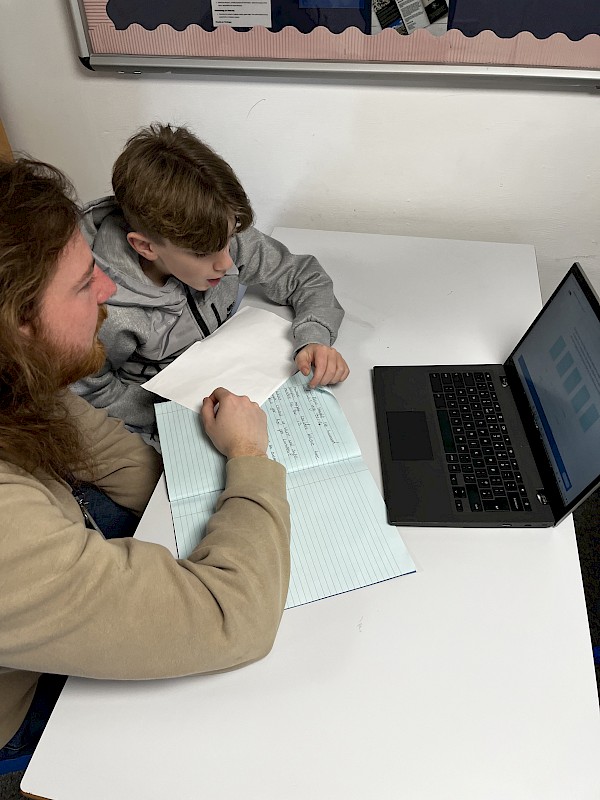
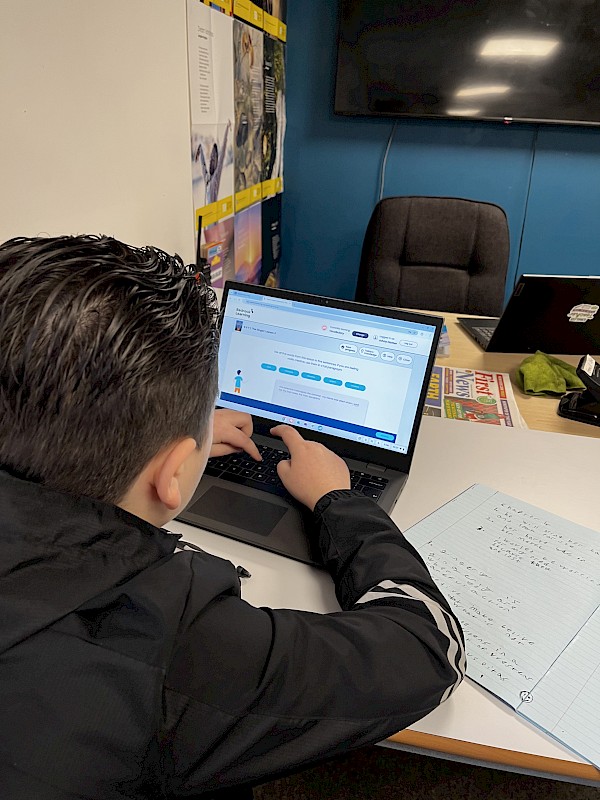
Students also use Bedrock Learning, an online programme that builds vocabulary and reading comprehension through short, regular sessions — helping students understand more of what they read, and use richer language in their own writing.
 

Key Stage 4 — three routes, matched to the student

Not every student is ready for the same qualification at the same time, so we offer three pathways:

  • Functional Skills (most students) — building strong, everyday reading, writing, speaking and listening skills, with certification available from Entry Level 1 through to Level 2.
  • AQA Step-Up English (Silver and Gold) — for students not yet at Functional Skills level. A flexible, unit-based programme with no formal exams, allowing students to achieve at Entry Level 1, 2 or 3 when they're ready.
  • GCSE pathway (students making expected progress) — working towards the Cambridge IGCSE English Language (0990). Students complete three pieces of coursework — non-fiction, descriptive and narrative writing — making up 50% of their final grade, alongside one exam paper and the opportunity to gain accreditation for speaking and listening.

By the end of Key Stage 4, students will be able to:

  • Read and understand — pick out explicit and implicit meaning in a range of texts, make connections between them, and use skimming, scanning and summarising to find the main ideas.
  • Write with confidence — write clearly for a chosen audience and purpose, using standard English, a richer vocabulary, and accurate grammar, punctuation and spelling.
  • Speak and listen well — understand spoken language and communicate clearly using spoken standard English.
  • Think and share ideas — approach texts and tasks with a resilient, "can-do" attitude, using critical thinking to generate and share their own ideas.